
WELCOME BONUS 300%
UP TO €2000 + 100
FREE SPINS
UP TO €2000 + 100
FREE SPINS
Home → Blackjack
Blackjack at Stars Vega: Variants, Rules and Payouts
When does the table max bet apply?
The maximum betting limits for Quantum Blackjack Plus Live range from 1 EUR to 5,000 EUR per round. This upper boundary defines the highest stake a player can risk during any single hand at this specific Playtech table. Consequently, high rollers must ensure their bankroll supports these maximum wagers before engaging in extended play sessions.
Infinite Blackjack offers an identical maximum wagering cap of 5,000 EUR, matching the limit found at the Quantum variant. Players utilizing Evolution software face this same financial ceiling, which applies uniformly across all standard rounds regardless of side bet selections. Therefore, budget management requires strict adherence to this 5,000 EUR threshold to avoid automatic rejection of oversized bets.
Quantum Blackjack Plus Live allows quantum multipliers up to 1,000x on three-card combinations totaling 21 points. This multiplier potential applies directly to the active stake within the 1 to 5,000 EUR betting window established by the table rules. Such high-volatility features significantly impact payout speed calculations when large wins occur within the defined betting constraints.
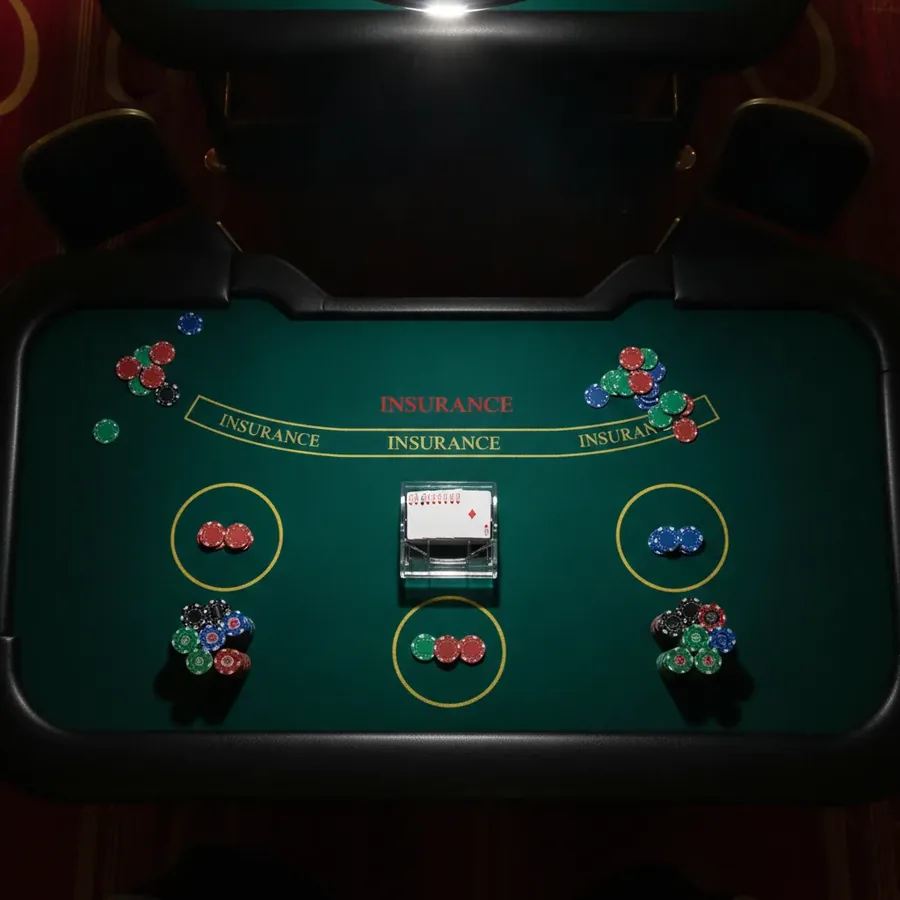
Place Side Bet before cards are dealt
Side bets like Any Pair or Hot 3 are mandatory placements before the initial deal at Infinite Blackjack tables. These optional wagers operate independently from the main game but require immediate funding alongside the primary blackjack stake. The presence of these four available side bets increases the total action volume required per round significantly.
Blackjack Insurance represents a separate side bet allowing players to wager up to 50% of the main stake if the dealer shows an Ace. This insurance option carries a distinct house edge of 7.47%, resulting in an RTP of only 92.53% over the long term. Strategic avoidance of this specific side bet preserves overall return percentages compared to other available table options.
The RTP for Infinite Blackjack stands at 99.47% when employing optimal strategy without considering side bet outcomes. This figure excludes the negative impact of auxiliary wagers that typically lower the aggregate return percentage for casual players. Understanding this distinction helps manage expectations regarding payout speed and overall profitability during live dealer sessions.
How long does a Live Blackjack round take?
Live dealer rounds at Evolution tables like Infinite Blackjack involve multiple phases including card dealing, decision making, and settlement procedures. Each participant receives two cards initially, followed by optional actions like doubling down or splitting pairs which extend the duration. This structured sequence ensures fair play while maintaining a steady pace suitable for real-time online interaction.
Quantum Blackjack Plus Live introduces additional complexity through quantum multiplier evaluations that occur after the initial hand resolution. These special features may trigger extra animations or calculations, potentially adding several seconds to each individual round cycle. The base betting range of 1 to 5,000 EUR remains constant throughout these extended procedural sequences.
Standard blackjack hands typically resolve within two to three minutes depending on player decisions and dealer speed. Factors such as late surrender options or double after split rules influence the time required for complete hand evaluation. Consistent timing across thousands of hands allows for accurate tracking of hourly loss rates and payout frequency metrics.
Stand-on-17 Rule and Its Meaning for Players
The Stand-on-Soft-17 rule requires the dealer to stand when holding a hand valued at seventeen including an Ace counted as eleven. This specific condition appears in the standard 6-deck version offering an RTP of 99.54% with a 0.46% house edge. Implementing this rule reduces the casino advantage compared to variations where the dealer hits soft seventeen totals.
Dealer hitting soft seventeen adds 0.22 percentage points to the house edge, worsening player returns significantly over time. This penalty transforms a favorable 0.46% disadvantage into a much steeper hurdle requiring perfect basic strategy execution. Players choosing tables with S17 rules benefit from slower erosion of their bankroll during extended playing sessions.
Basic strategy dictates specific actions based on whether the dealer stands or hits on soft seventeen totals. Deviating from optimal play against a hitting dealer increases losses beyond the inherent 0.46% statistical disadvantage. Correct application of these strategies minimizes variance and supports more predictable payout speeds over thousands of hands played.
Side Bet Every Round: Budget Lasts 30 Rounds
A starting balance of 30 EUR allows approximately thirty rounds at Infinite Blackjack when betting the minimum 1 EUR stake. This calculation assumes no side bets are placed, preserving the full principal amount for primary gameplay actions only. Extending play beyond this count requires either depositing additional funds or achieving winning streaks to replenish the account.
Including side bets like Bust It or 21+3 consumes portions of the 30 EUR budget much faster than base wagers alone. Each auxiliary wager demands separate funding before every deal, effectively halving the number of playable rounds for fixed budgets. Strategic omission of these high-edge bets extends session longevity and improves overall return percentages significantly.
Blackjack Party tables impose minimum bets of 1 EUR alongside maximum limits of 1,000 EUR per round. This structure allows consistent small-stake players to participate fully without facing restrictive entry barriers common at other venues. Maintaining a 30 EUR reserve ensures sustained engagement with dual-moderator interactions while managing financial exposure carefully.
Blackjack variants at a glance
| Variant | Payout | House edge | Rule | Bet range |
|---|---|---|---|---|
| Blackjack Ein Deck, klassische Regeln, 3:2 | 99.85% | 0.15% | Weniger Decks = niedrigerer Vorteil; ein Deck gibt ca. −0.48 Prozentpunkte gegenüber 8 Decks. Oft durch 6:5 Auszahlung kompensiert. | Blackjack 3:2, Gewinn 1:1 |
| Blackjack 6 Decks, S17, DAS, DOA, Auszahlung 3:2, Basisstrategie | 99.54% | 0.46% | Dealer steht auf Soft 17; Verdopplung auf jeder Zweierkarte; Verdopplung nach Split erlaubt; keine Aufgabe. Basisstrategie ist für diesen Wert zwingend | Blackjack 3:2, normaler Gewinn 1:1, Insurance 2:1 |
| Blackjack Liberal Vegas Strip (liberale Regeln, 3:2) | 99.72% | 0.28% | Günstigste Regelkombination: S17 + DAS + Resplit + Late Surrender. Standardabweichung 1,15 | Blackjack 3:2, Gewinn 1:1 |
| Blackjack Auszahlung 6:5 statt 3:2 (6 Decks) | 98.15% | 1.85% | Ersatz von 3:2 durch 6:5 fügt exakt +1.39 Prozentpunkte zum Vorteil des Casinos hinzu – stärker als jede andere Regeländerung. Bei $10 Einsatz zahlt Blackjack $12 statt $15. | Blackjack 6:5, Gewinn 1:1 |
| Blackjack Insurance / Versicherung (6–8 Decks) | 92.53% | 7.47% | Separate Nebenwette bis 50% der Hauptwette, wenn der Dealer ein Ass hat. Basisstrategie schreibt IMMER Ablehnung vor (außer Karten zählen bei True Count ≥ +3). Bei einem Deck Vorteil ≈ 5.88% | Insurance 2:1 |
| Blackjack Surrender (Late Surrender) – Regel-Effekt | n.a. (Regel-Modifikator) | −0.08 Prozentpunkte | Spieler gibt Hand nach Dealer-Blackjack-Prüfung auf, verliert die Hälfte des Einsatzes. Verbessert RTP um ca. 0.08 Prozentpunkte. Early Surrender ist wesentlich wertvoller (bis −0.6 Prozentpunkte), aber extrem selten. | Rückzahlung 50% des Einsatzes |
Splitting costs double bet: plan budget
The Split mechanic allows players to divide a pair into two independent hands, with the second hand requiring an additional bet equal to the original stake. This doubles the immediate cash outflow for each decision, as seen in Infinite Blackjack where bets range from 1 to 5.000 EUR. Players must ensure their bankroll covers both active hands simultaneously to avoid forced folding on subsequent rounds.
Double After Split (DAS) is permitted at tables like Infinite Blackjack and Quantum Blackjack Plus Live, enabling further investment after a split occurs. DAS improves player odds by approximately 0.14 percentage points, but it requires placing another full-sized wager. The total exposure can quickly escalate if multiple splits occur during a single round of play.
The Quantum Blackjack Plus Live table offers multipliers up to 1.000x on specific three-card combinations, which can offset high betting volumes. However, the base house edge remains at 0.46% under standard rules without these side bet enhancements. Budget planning must account for the potential variance introduced by these volatile multiplier features.
Step-by-step Split at the Live Table
Infinite Blackjack provides unlimited seating and supports the Split action for pairs such as Aces or Tens. Players initiate the split by placing a matching bet alongside the original chip stack on the designated area. The dealer then deals one card to each new hand before resolving them sequentially against the dealer's upcard.
Resplitting Aces (RSA) is allowed at Liberal Vegas Strip variants, improving the Return to Player rate by roughly 0.08 percentage points. This rule permits splitting Aces again if another Ace is drawn, though typically only one additional card is dealt per split Ace. The strategic value increases significantly compared to tables restricting re-splitting to non-Ace cards only.
Quantum Blackjack Plus Live introduces quantum multipliers that can activate on any winning hand, including those resulting from a successful split. These multipliers apply to the total payout of the specific split hand, potentially yielding significant returns even with modest initial stakes. The feature adds a layer of unpredictability to the standard blackjack resolution process.
RNG draws cards from virtual eight-deck shoe
Standard RNG blackjack games typically utilize an eight-deck shoe, increasing the house edge to approximately 0.46% compared to single-deck variations. The larger number of decks reduces the effectiveness of card counting strategies and lowers the probability of hitting natural blackjacks. This configuration balances operational efficiency with manageable volatility for high-volume online sessions.
The Blackjack Ein Deck variant contrasts sharply by using a single deck, which reduces the house edge by about 0.48 percentage points relative to eight-deck games. Fewer cards mean higher frequency of favorable outcomes for skilled players employing basic strategy. The reduced deck count also increases the impact of every individual card removal on the remaining shoe composition.
Blackjack Insurance is a separate side bet available when the dealer shows an Ace, paying 2:1 if the dealer has a ten-value hole card. This bet carries a high house edge of 7.47% and is statistically unfavorable unless the player employs advanced card counting techniques. Base strategy dictates always rejecting insurance for average players due to its negative expected value.
How many decks are in the shoe?
Most standard online blackjack tables operate with six to eight decks, creating a house edge around 0.46% under optimal conditions. The Blackjack 6 Decks variant specifically lists a 0.46% house edge with S17, DAS, and DOA rules. This multi-deck setup dilutes the advantage gained from removing low cards compared to single-deck games.
Single-deck blackjack offers superior odds with a house edge as low as 0.15%, provided the game pays 3:2 for naturals. The Blackjack Ein Deck entry highlights this efficiency, noting that fewer decks directly lower the casino's statistical advantage. Players seeking maximum theoretical return should prioritize these single-deck environments over standard multi-deck offerings.
The number of decks significantly influences the effectiveness of doubling down and splitting strategies across different game variants. Eight-deck shoes make resplitting Aces less impactful than in single-deck scenarios due to the diluted card density. Understanding the deck count helps players adjust their betting patterns and strategic expectations accordingly.
How long do 100 EUR last at a 1 EUR table?
At a minimum bet of 1 EUR per hand, a 100 EUR bankroll allows for exactly 100 initial hands before total depletion. This calculation assumes no wins occur, providing a baseline for worst-case scenario duration. In practice, wins extend this timeframe by replenishing the stake pool during losing streaks.
Table speed varies between providers, with Evolution's Infinite Blackjack accommodating unlimited players and potentially slower dealing times. Playtech's Quantum Blackjack Plus Live may have faster resolution due to automated multiplier calculations. Average session length depends heavily on whether the player hits winning hands that sustain the balance.
Bonus contributions differ, with table games contributing only 10% toward wagering requirements compared to slots at 100%. A 100 EUR deposit might require generating 1.000 EUR in turnover if utilizing a bonus offer. This requirement drastically extends the necessary playing time beyond simple bankroll consumption metrics.
Soft 17: Dealer Hits or Stands
The dealer hitting on Soft 17 is a critical rule modifier that directly impacts the game's mathematical edge. This specific action increases the house advantage by exactly 0.22 percentage points compared to standing rules. Players relying on standard strategy will see their expected return drop significantly under this condition.
In contrast, the Blackjack Liberal Vegas Strip variant requires the dealer to stand on Soft 17. This configuration yields a superior house edge of 0.28 percent against the player base. The difference between hitting and standing creates a measurable gap in long-term profitability for the participant.
Resplitting Aces offers a partial counterbalance by improving the RTP by approximately 0.08 percentage points. However, this benefit does not fully offset the negative impact of the dealer hitting soft seventeen. Players must adjust their expectations knowing the combined effect lowers the overall payout potential.
Splitting Eights vs Standing on 16
Doubling After Split (DAS) is a favorable rule that improves the RTP by roughly 0.14 percentage points. This allows players to double their bet on any hand created through splitting, including those from pairs. Such flexibility provides more opportunities to capitalize on strong starting cards during play.
Resplitting Aces further enhances player value by adding another 0.08 percentage points to the return rate. This rule permits splitting aces multiple times if additional aces are drawn, creating separate hands. It remains a crucial component for minimizing the house edge in liberal variants.
Using six decks instead of eight reduces the house advantage by approximately 0.02 percentage points. Fewer decks lower the probability of drawing certain cards, slightly favoring the strategic player. This minor adjustment contributes to the overall efficiency of the game structure over time.
When can you increase your bet?
Doubling down is permitted with any two-card hand totaling nine, ten, or eleven points in most variants. This action allows players to double their initial wager in exchange for receiving exactly one more card. It is a fundamental strategic tool for maximizing returns on favorable starting combinations.
Infinite Blackjack by Evolution supports doubling after split, expanding betting opportunities beyond the initial deal. Players can double bets on new hands formed after splitting pairs, increasing potential payouts. This feature aligns with standard liberal rules found in high-value table games.
Quantum Blackjack Plus Live introduces multipliers up to 1000x on specific three-card combinations totaling twenty-one points. These multipliers apply to the original bet or doubled stakes when conditions are met. Such mechanics add volatility but do not alter the underlying house edge of 99.57 percent.
Unlimited seats via a split dealer hand
Infinite Blackjack allows an unlimited number of players to participate at a single virtual table seat. This format uses a continuous shuffle machine to ensure fair dealing for all concurrent participants. The game maintains a house edge of 0.47 percent despite the high volume of players.
Blackjack Party hosted by Evolution features two moderators managing a lively atmosphere for seated players. Betting limits range from 1.00 EUR to 1.000 EUR per hand placed during the session. The dual-host setup aims to replicate the social energy of a physical casino floor.
Quantum Blackjack Plus Live restricts participation to specific multiplier events rather than offering infinite seating. Bets range from 1 EUR to 5.000 EUR with potential outcomes boosted by quantum technology. The game focuses on high-variance moments rather than steady, low-limit engagement.
Bonus Lost Due to 10 Percent Contribution
Table games contribute only 10 percent toward fulfilling the wagering requirements of the welcome bonus offer. This low contribution rate means players must wager ten times more on blackjack than on slots. The 300 percent match up to 2,000 euros becomes difficult to clear through table play alone.
Slots contribute 100 percent to the turnover requirement, making them the efficient choice for bonus clearance. A player wagering 1,000 euros on slots fully satisfies that portion of the requirement. Conversely, the same amount on blackjack only counts as 100 euros toward the goal.
Insurance bets in live blackjack carry a house edge of 7.47 percent, significantly higher than main bets. This side bet should be avoided unless counting cards with a true count of plus three. Playing insurance negatively impacts both the bonus conversion speed and overall bankroll stability.
Contact
Live - online chat
Banking









Providers












Vegastars Casino 2026